
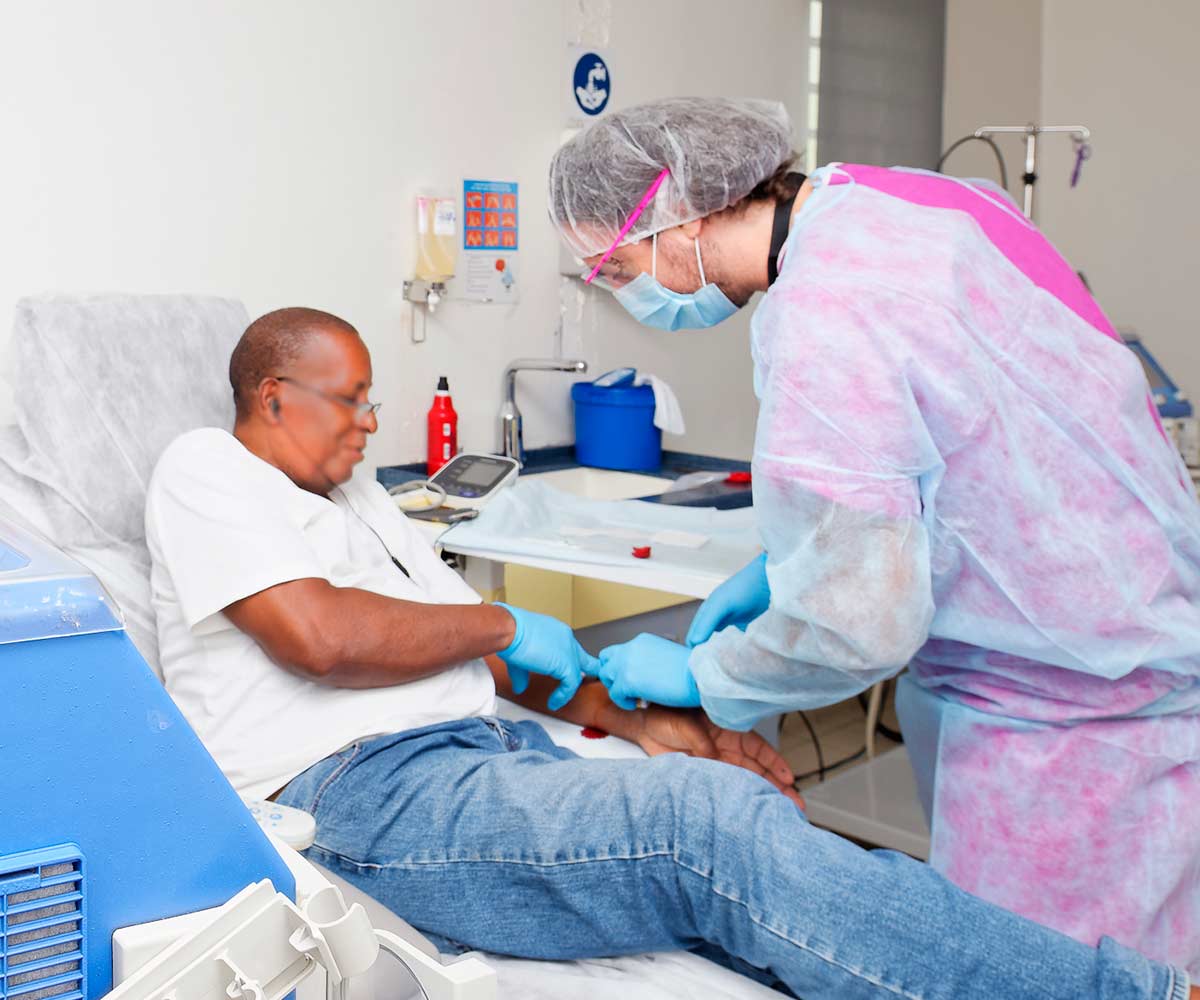
Chronic kidney failure affects many people in Martinique. When the kidneys no longer perform their blood purification function, hemodialysis becomes a vital treatment. ATIR, Association for the Treatment of Renal Insufficiency, supports patients at each stage of this care journey.
What is hemodialysis
The kidneys constantly filter the blood: they eliminate waste and excess water, and participate in the balance of potassium, sodium and phosphorus. In the event of severe renal failure, this function is no longer ensured. Hemodialysis then takes over: the blood is filtered outside the body by a dialyzer (artificial filter) connected to a machine called a dialysis generator.
How does a session take place?
A hemodialysis session generally lasts between 3 and 4 hours, with 3 sessions per week. Blood circulates from the patient to the dialyzer through vascular access: an arteriovenous fistula (surgically created, most often in the arm) or a catheter. During the session, the patient is seated comfortably: he can read, rest or watch a screen. Each session is supervised by a team of health professionals trained in dialysis.
Different modalities: in the center or at home
- In-center hemodialysis (autodialysis – UAD) : the sessions take place in an autodialysis unit, close to the patient’s home.
- Home hemodialysis (HDD) : the patient, trained and supported by the healthcare team, carries out his sessions at home. This modality offers more autonomy and flexibility in the organization of the week.
- Peritoneal dialysis : another dialysis technique carried out at home, which uses the peritoneum (the membrane which lines the abdomen) as a natural filter.
The choice of modality depends on the health status, lifestyle and preferences of each patient. It is discussed with the nephrologist, as part of personalized medical monitoring.
Holidays and dialysis: staying in Martinique
Being on dialysis does not prohibit travel. Patients passing through the island can benefit from dialysis sessions in the ATIR units, provided they organize their stay in advance: contact your center of origin and the ATIR several weeks before departure, with your medical file, your last dialysis prescription and your recent biological results.
Live well every day with dialysis
A few simple habits improve comfort between sessions: respect the dietary recommendations of the medical team (in particular the limitation of salt and water intake), monitor your weight gain between two sessions, maintain appropriate physical activity and protect your vascular access. And above all: report any unusual fatigue, pain or changes to the healthcare team.
This article is provided for informational purposes only and does not replace a medical consultation. If you have any questions about your treatment, talk to your nephrologist or the ATIR team.